
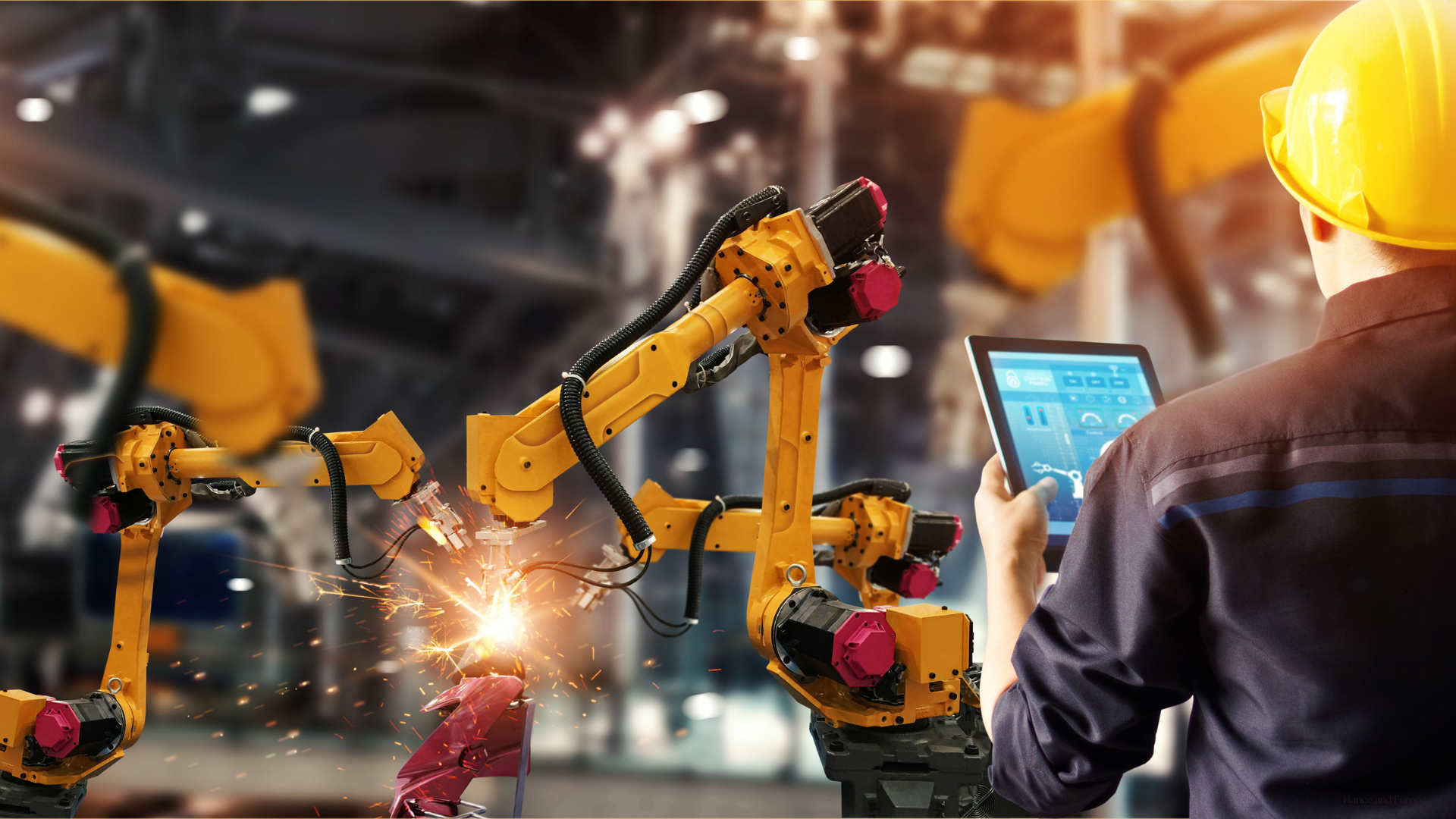
Physical AI
In an Every-Nation-for-Itself AI Era, Can Korea Compete Through Physical AI?
(각자도생 AI 시대, 한국은 Physical AI로 승부할 수 있는가)
In a recent episode of the YouTube series Jisigin Invitation EP.90, Professor Kim Dae-sik offered a compelling analysis of the structural challenges Korea faces in the AI era, while also highlighting the country’s realistic opportunities rooted in manufacturing. His argument—that Physical AI may be Korea’s survival strategy in an era of AI fragmentation—resonated strongly with me, particularly in light of a recent market study I conducted on AI and manufacturing, centered on the collaboration between Mistral AI and Stellantis.

Stellantis × Mistral AI: Europe’s Physical AI Experiment

Founded in 2023, Mistral AI is a relatively young company, but it has quickly emerged as one of the core pillars of Europe’s LLM sovereignty strategy, backed by the French government and European financial institutions. Beyond language models, Mistral AI has clearly positioned itself toward building industry-specific AI agents for manufacturing, energy, defense, and public administration.

Stellantis, meanwhile, is a global automotive group formed through the merger of France’s PSA Group and the U.S.-based FCA Group. With 14 automotive brands under its umbrella, Stellantis remains a traditional OEM at its core, but in recent years it has increasingly defined itself as a mobility technology company, accelerating its transition toward software- and AI-driven operations.
The collaboration between Stellantis and Mistral AI can be understood as one of the most representative Physical AI experiments currently underway in European manufacturing—an effort to integrate LLMs across vehicles, factories, and enterprise operations.
This collaboration unfolds along two main axes.
First, in the in-car domain, LLMs are being embedded directly into vehicles as Physical AI. Through natural language–based voice assistants, drivers can receive real-time explanations of vehicle functions, warning signals, and operational issues. In this model, the car is no longer just a means of transportation, but an interactive user interface that responds dynamically to human input.
Second, in manufacturing and operations, AI is being applied across vehicle development, production, and internal workflows. Use cases include BOM (Bill of Materials) analysis to improve development efficiency, automated analysis of vehicle feedback data for proactive quality management, internal task automation, and real-time anomaly detection on the factory floor. The scope of AI deployment continues to expand incrementally.
Where Korea’s Opportunity Emerges
The Mistral × Stellantis collaboration is significant in that it represents an attempt to extend LLMs beyond purely digital tools into Physical AI that simultaneously operates vehicles and factories.
As Professor Kim Dae-sik has noted, Physical AI in manufacturing remains an area where no global standards or definitive success models yet exist. For this reason, the core of competition is not algorithmic sophistication itself, but who accumulates real operational experience first—running AI within actual production processes and physical systems.
Across the industry, Physical AI is increasingly described as the final piece of the Fourth Industrial Revolution. Its competitive edge lies in how early and how deeply AI is deployed in real-world physical environments. Ultimately, this is not a software problem, but one of field engineering and operational execution.
From this perspective, competition in Physical AI can be distilled into a set of fundamental questions:
- Has the organization moved beyond PoC and pilot phases to full-scale production and operational deployment?
- Has it accumulated decision-grade data created through real operations by manufacturing engineers who deeply understand the process?
- Has it applied AI under real constraints—quality, safety, cost, and operational continuity?
It is precisely at this point that Korea’s opportunity becomes clear.
Korea already possesses manufacturing environments of global scale and sophistication. Across semiconductors, batteries, automotive, and precision machinery, it has accumulated long-term experience in integrating and operating complex physical systems, supported by robotics, automation, and production data embedded in daily operations.
In this context, Korea is not simply a manufacturing powerhouse. It has the characteristics of a partner capable of rapidly accumulating Physical AI execution experience, making collaboration with the French and European market both realistic and strategically meaningful.
In an era of AI-driven fragmentation and self-reliant competition, whether Korea remains a nation that follows—or becomes a lead architect in the emerging Physical AI landscape—will be determined by how strategically it continues to build and leverage this execution advantage.
Souces & References
Mistral AI – Official Website
https://mistral.ai
Stellantis and Mistral AI Strengthen Strategic Partnership to Enhance Customer Experience, Vehicle Development and Manufacturing
French Government – National Artificial Intelligence Strategy
https://www.entreprises.gouv.fr/priorites-et-actions/autonomie-strategique/soutenir-linnovation-dans-les-secteurs-strategiques-de-6
European Union – EU Artificial Intelligence Act (AI Act)
https://artificialintelligenceact.eu
European Commission – European Approach to Artificial Intelligence (AI & Manufacturing)
https://digital-strategy.ec.europa.eu/en/policies/european-approach-artificial-intelligence
European Commission – AI Factories Initiative
https://digital-strategy.ec.europa.eu/en/policies/ai-factories
Bpifrance – AI Policy and Industry Support
https://www.bpifrance.fr/nos-appels-a-projets-concours/appel-a-projets-des-pionniers-de-lintelligence-artificielle
Horizon Europe
https://digital-strategy.ec.europa.eu/en/policies/european-ai-research
European Union – Horizon Europe Research & Innovation Program
https://research-and-innovation.ec.europa.eu/funding/funding-opportunities/funding-programmes-and-open-calls/horizon-europe_en
Adoption of AI in EU Manufacturing: Gaps and Challenges
각자도생 AI 시대, 한국은 Physical AI로 승부할 수 있는가
최근 유튜브 지식인 초대석 EP.90에서 김대식 교수의 인터뷰는 AI 시대를 바라보는 한국 사회의 구조적 한계와 동시에, 제조업을 기반으로 한 현실적 가능성을 함께 짚어냈습니다. 특히 “각자도생 AI 시대에서 한국의 생존 전략은 Physical AI”라는 방향성은 최근 AI–제조업 관련으로 진행했던 시장조사(Mistral–Stellantis 협업 사례)와 맞닿아 있어 개인적으로 더욱 의미 있게 다가왔습니다.
이 글에서는 Mistral AI와 Stellantis의 협업 사례를 기반으로, 한국의 Physical AI 전략이 갖는 현실적 맥락을 살펴보고자 합니다.
Stellantis × Mistral AI: 유럽의 Physical AI 실험
Mistral AI는 2023년 설립된 신생 기업이지만, 프랑스 정부와 유럽 금융권의 지원 아래 유럽형 LLM 주권 전략의 핵심 축 중 하나로 성장하고 있습니다. 언어모델을 넘어 제조·에너지·국방·행정 등 산업별 AI 에이전트로의 확장을 명확히 지향하고 있습니다.
Stellantis는 프랑스 PSA 그룹과 미국 FCA 그룹의 합병으로 탄생한 글로벌 완성차 기업으로, 14개 자동차 브랜드를 보유하고 있습니다. 전통적인 OEM 기업이지만, 최근에는 스스로를 ‘모빌리티 테크 기업’으로 정의하며 소프트웨어·AI 중심의 전환을 추진하고 있습니다.
1년 이상에 걸쳐 파일럿과 공동 개발 단계로 진행되고 있는 양사 협업은 LLM을 실제 차량, 제조, 조직 운영 전반에 통합하려는 유럽 제조업의 대표적인 Physical AI 실험 사례중 하나입니다.
이 협업은 크게 두 축으로 나뉩니다.
첫째, 인카(In-Car) 영역에서는 LLM이 차량이라는 물리적 제품 안에서 작동하는 Physical AI로 확장되고 있습니다. 자연어 기반 AI 음성 어시스턴트를 통해 운전자는 차량 기능, 경고등, 문제 상황에 대해 실시간으로 안내를 받을 수 있으며, 차량은 단순한 이동 수단을 넘어 사용자와 상호작용하는 인터페이스 공간으로 재정의되고 있습니다.
둘째, 제조 영역에서는 차량 개발, 생산, 내부 운영 전반의 효율을 높이는 데 AI가 활용되고 있습니다. 부품 데이터(BOM) 분석을 통한 개발 효율 개선, 차량 피드백 데이터의 자동 분석을 통한 선제적 품질 관리, 내부 업무 자동화, 그리고 제조 공정에서의 실시간 이상 감지까지 적용 범위가 점차 확장되고 있습니다.
Mistral X Stellantis 협업 사례는 LLM을 단순한 디지털 도구가 아니라 차량과 공장을 동시에 움직이는 Physical AI로 확장하려는 시도라는 점에서 중요한 의미를 갖습니다.
김대식 교수의 언급처럼, 제조업에서의 Physical AI가 아직 글로벌 표준도, 확정된 성공 모델도 존재하지 않는 영역임을 보여주기 때문입니다. 따라서 경쟁의 핵심은 AI를 실제 공정과 물리 시스템 안에서 운영해본 경험을 누가 먼저 축적하느냐에 있습니다.
최근 업계에서는 Physical AI를 4차 산업혁명의 마지막 퍼즐로 평가하며, 그 경쟁의 핵심을 AI를 실제 물리 환경에서 얼마나 먼저, 얼마나 깊이 작동시켜보았는가에 두고 있습니다. 결국 이는 현장 엔지니어링과 운영 경험의 문제로 귀결됩니다.
따라서 Physical AI의 경쟁은 다음과 같은 질문으로 정리됩니다.
- PoC와 파일럿 단계를 넘어 양산·운영 단계까지 확장해본 경험이 있는가
- 공정을 깊이 이해한 제조 엔지니어가 실제 운영 과정에서 만들어낸 데이터가 충분히 축적되어 있는가
- 품질·안전·비용·운영 제약 속에서 AI를 실제로 적용해본 경험이 있는가
바로 이 지점에서 한국의 기회가 분명해집니다.
한국은 이미 글로벌 최고 수준의 제조 현장을 보유하고 있습니다. 로봇·자동화 설비·공정 데이터가 축적된 산업 구조 속에서 반도체, 2차전지, 자동차, 정밀기계 등 다양한 분야에서 물리 시스템 통합과 운영 경험을 장기간 축적해왔기 때문입니다.
이 점에서 한국은 Physical AI 실행 경험을 빠르게 축적할 수 있는 실증 파트너로서, 프랑스와 유럽시장과의 협업 가능성 또한 지니고 있다고 봅니다.
AI 각자도생의 시대, Physical AI라는 새로운 경쟁 구도 속에서 한국이 ‘따라가는 국가’가 아니라 ‘이끌어가는 설계자’로 자리매김할 수 있기를 기대합니다.
자료 출처
Mistral AI – Official Website
https://mistral.ai
Stellantis and Mistral AI Strengthen Strategic Partnership to Enhance Customer Experience, Vehicle Development and Manufacturing
French Government – National Artificial Intelligence Strategy
https://www.entreprises.gouv.fr/priorites-et-actions/autonomie-strategique/soutenir-linnovation-dans-les-secteurs-strategiques-de-6
European Union – EU Artificial Intelligence Act (AI Act)
https://artificialintelligenceact.eu
European Commission – European Approach to Artificial Intelligence (AI & Manufacturing)
https://digital-strategy.ec.europa.eu/en/policies/european-approach-artificial-intelligence
European Commission – AI Factories Initiative
https://digital-strategy.ec.europa.eu/en/policies/ai-factories
Bpifrance – AI Policy and Industry Support
https://www.bpifrance.fr/nos-appels-a-projets-concours/appel-a-projets-des-pionniers-de-lintelligence-artificielle
Horizon Europe
https://digital-strategy.ec.europa.eu/en/policies/european-ai-research
European Union – Horizon Europe Research & Innovation Program
https://research-and-innovation.ec.europa.eu/funding/funding-opportunities/funding-programmes-and-open-calls/horizon-europe_en
Adoption of AI in EU Manufacturing: Gaps and Challenges